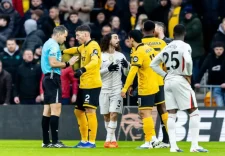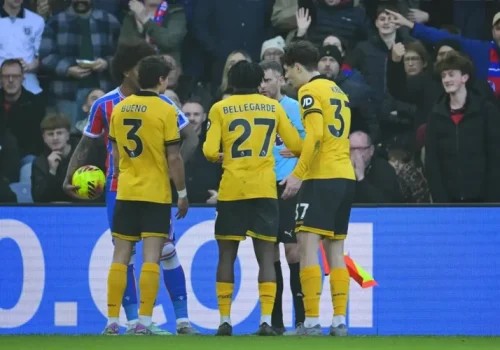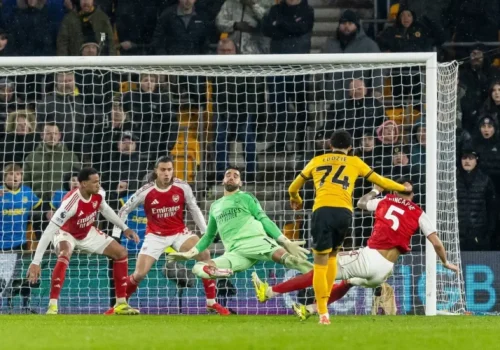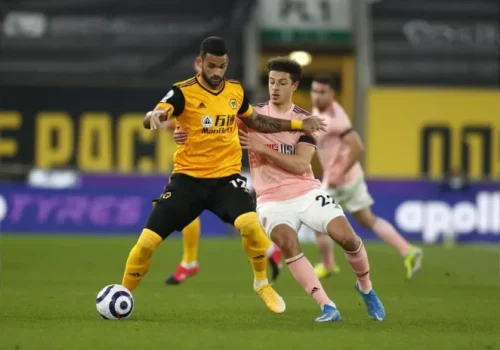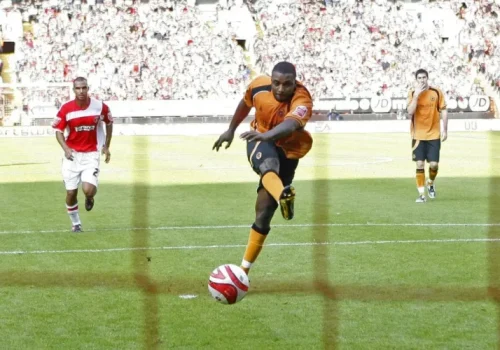

Wolverhampton Wanderers managed to book their place in the next round of the FA Cup with a 1-0 win over League Two side Grimsby Town at Blundell Park. On paper, it should have been a routine tie: Premier League opposition against a side three divisions lower. In reality, it was anything but comfortable. Wolves did what cup football ultimately demands: they found a goal, kept things tight at the back, and avoided embarrassment. But while progression was secured, the performance left plenty to debate. As ever, let’s get into the two good and the two bad.
Good – A Place In The Next Round Secured
First and foremost, Wolves are in the hat for the next round. That was the primary objective, and Wolves have achieved that. The single goal from Santiago Bueno proved decisive, and Rob Edwards side lives to fight another day in the competition.
Cup runs can help build momentum, and in the midst of a miserable season, it gives fans something to look forward to. At the end of the day, Wolves won’t care how scrappy the game was. They are through to the next round, and at the end of the day, that’s all that matters. Avoiding a banana skin against lower league opposition is an achievement in itself.
Good – Back To Back Clean Sheet
Despite frustrations in attack, Wolves once again demonstrated defensive solidity. Grimsby were restricted to very little in terms of clear-cut chances, with Sam Johnstone only having to make the one save in the dying minutes of the game. The back line remained disciplined throughout.
Another clean sheet suggests a side that is becoming more difficult to break down. In fact, it’s the first time since February 2024 that Wolves have kept clean sheets in back-to-back away games. In knockout football, that defensive platform is priceless. It might not quicken the pulse, but it does steady the nerves and for the fans, that alone is often worth celebrating.
Bad – A Solitary Shot On Target
Now for the part that prompts a raised eyebrow. Wolves managed just one shot on target across the 90 minutes which was the one that resulted in the winning goal.
Efficiency is admirable. Minimalism, less so. Against opposition three leagues below, you would expect a little more sustained attacking pressure. While clinical finishing is to be applauded, relying on a solitary accurate effort feels like living dangerously in a competition famed for giant-killing games.
Bad – Lack Of Dominance Against Lower League Opposition
This was a game many would have anticipated Wolves controlling from start to finish. Instead, large portions of the match felt cagey and scrappy, with Grimsby more than competitive.
Although the condition of the pitch, as well as the weather, there were spells where Wolves struggled to impose themselves physically and technically in the way a Premier League side should. The tempo was steady rather than suffocating, and clear chances were at a premium. For a team operating three tiers above their opponents, a more authoritative display would have been expected.
Overall, Wolves did the job. They progressed, kept another clean sheet, and avoided the dreaded FA Cup headline about giant killings. Yet it was a performance that balanced professionalism with just a hint of playing-with-fire energy. Cup football rarely apologises for being untidy, and Wolves will happily take their place in the next round. Still, one shot on target against League Two opposition is unlikely to strike fear into future opponents.
Progress? Absolutely. Dominant? Not quite. Effective? Just about. And in the FA Cup, sometimes that’s enough.