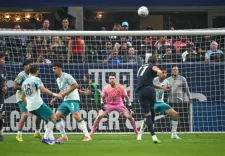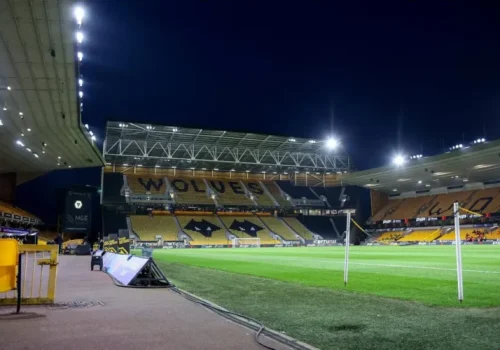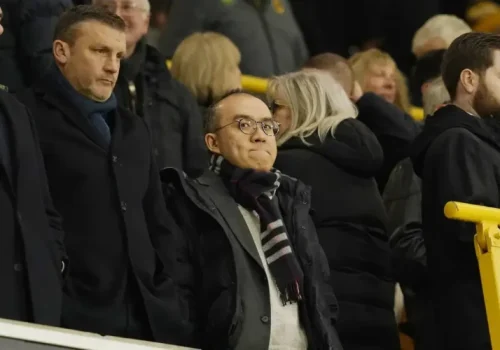

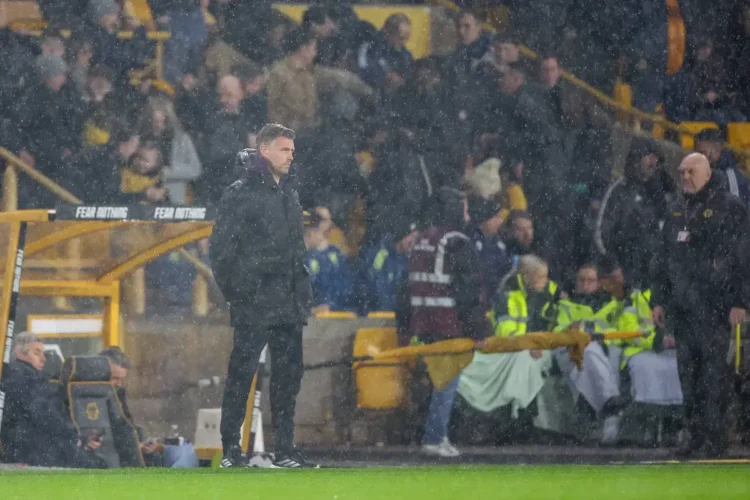
It was Gary Lineker who once said “Football is a simple game. Twenty-two men chase a ball for 90 minutes and at the end, the Germans always win.”
Indeed, football is an incredibly simple game; it’s the great connector of people, a social phenomenon, something anyone can play and also drives a wedge between us when those horrible, horrible people from half an hour down the road try to get involved.
But footballers are not simple people.
Despite the fact that we love, hate, cheer and boo these modern gladiators who get paid princely sums of money in the hopes of being our kings and queens, they’re just normal people like you or me. They think, they feel, and they overthink. They have good days, and they have bad days.
We often play excuse bingo when a player doesn’t look at their very best; head’s gone, they’re a system player, they’ve lost their ability, they’ve lost the dressing room, they need to get used to the league.
But is it as simple as that?
To gain insight on the “why” behind the “what (the f***ing hell was that)” I spoke to two sports psychologists, Dr Paul McCarthy from Glasgow, and Professor Andrew Lane from the University of Wolverhampton to understand what’s actually happening when a player suddenly looks like they’ve forgotten how to play football.
I asked them a range of differing questions around confidence, losing form, what happens when a dressing room starts to struggle, and psychological safety. Their answers in full, were incredibly fascinating and help to paint a picture of what’s going on inside on the pitch.
What Happens When A Player Drops in Form?
On a player beginning to struggle, Dr. McCarthy suggested it is because their brain shifts from automatic mode to ‘survival mode’. In automatic mode, skills flow without thinking. In survival mode, the brain focuses on avoiding mistakes, not expressing skill.
With that, he suggests that switch leads to slower decisions, hesitation, playing safe, and overthinking simple actions. It’s not that the player suddenly becomes worse it’s that their mental capacity is overloaded, and their natural game is interrupted.
On the subject of confidence, I asked Professor Lane whether it was real, or just a story players tell themselves.
He spoke about how confidence is real, but in psychology, it’s called self-efficacy, a term developed by Albert Bandura. Self-efficacy isn’t about general belief like “I’m a good player”, it’s task-specific: “I can execute this pass, beat this man, score from this position, in this moment.”
“That distinction matters, because players don’t lose ability overnight, but they can lose belief in their ability to deliver it under pressure.”
Both answers explain that footballers don’t lose their ability, rather their belief to perform to the best of their ability.
On self-efficacy, Professor Lane helpfully explained the four key sources of it, and how we see them play out on the football field. In self-efficacy, it’s made up of mastery experiences (recent performances), vicarious experiences (what they see around them), verbal persuasion (feedback & messaging) and emotional & physical state.
If a player begins to make mistakes, doubt and confidence in their ability can start to creep in, which is where chances get snatched, passes get misplaced, and hesitation can start to appear. Feedback and messaging was particularly intriguing, especially as we see “new manager bounces”, and also previously underperforming players coming on leaps and bounds under a new manager.
The key point Professor Lane made was players don’t just perform based on ability, they perform based on what they believe they can successfully execute right now.
With that, a tactical system clicking isn’t just about what happens on the training pitch, it’s also helped along by high confidence in both the player themselves, and what they can see around them.
How Does A Crowd Affect Performance?
I once saw a man punch the corrugated metal at the top of the South Bank in the season we went down to League One. Out of pure frustration as to what he was seeing on the pitch, I should suggest, and not for any different reason.
The reaction of a crowd can make or break a visiting or indeed a home team, with cheers and jeers impacting performance. The ideal for a football stadium is a “fortress” with “hostile atmosphere”.
I posed a question on psychological safety in football to Dr McCarthy, and how much a player’s success depends on it. He suggested that a “huge amount” of a player’s success depends on that feeling of safety, and at the highest level, even a small mental shift changes the entire performance.
When psychological safety is present, the brain stays in exploration mode; players take good risks, stay creative, and bounce back quickly. When it’s missing, the brain shifts into protection mode; players hide, panic, or freeze.
So how much of that can be influenced by the crowd?
Dr McCarthy went on to say the crowd’s reaction is a major variable. Negative responses, boos, groans, sarcastic cheers, are an external threat stimulus. Hostile or disappointed crowd feedback can absolutely push a player deeper into that state of ‘survival mode’ if they lack strong psychological countermeasures.
Professor Lane had a similar answer, and that a player’s reaction to a hostile crowd in the moment is conscious, but mostly subconscious. They may not directly think “the crowd is affecting me”, but you will see it in their decision making as they try to get rid of the ball quickly, take fewer risks, or begin to hesitate.
“A hostile crowd amplifies perceived threat and especially after mistakes. That raises anxiety, which narrows attention and biases decisions toward safety.”
Both Dr McCarthy and Professor Lane suggested in different forms that preparation and experience is key to dealing with these scenarios, and that more experienced players can reinterpret a hostile atmosphere into the energy of the crowd.
“For many, especially younger or less secure players, it’s destabilising. So the effect is real, immediate, and often invisible to the player themselves.” Professor Lane said when speaking on the difference that experience can make.
Can You Lose A Dressing Room?
Realistically, you can’t “lose” a dressing room. To paraphrase the classic movie Snatch, where’d you lose it? It ain’t a set of car keys, is it? Also, it’s a four tonne dressing room, it’s not as if it’s a packet of peanuts, is it?
However, the phrase “losing the dressing room” means that the manager is unable to inspire confidence in the players, and collective heads have dropped. But what happens when the dressing room is lost, and when do players know they’re in trouble?
Professor Lane suggested that the players will know that the game’s gone far earlier than the fans will. Conversations begin to shift, frustrations go unchallenged, players stop holding one another accountable and begin protecting themselves.
What we, the fan, will begin to see is potentially less communication on the pitch, more gesturing after mistakes. You’ve seen it before, a goalkeeper ripping a defender’s head off after a misplaced clearance, more gesticulating after a cross floats into the abyss. You’ve probably seen it a lot this season, the frustrations on and off the pitch being played out before us.
Professor Lane continued to suggest that in this moment, belief becomes fragile, and that belief can drive collapse. Not in a mystical way, but through behaviours like playing safer passes, delaying decisions and avoiding responsibility.
The most interesting thing in this was Professor Lane saying “Ironically, those behaviours increase the likelihood of poor outcomes and it becomes self-fulfilling. The team isn’t just losing but it’s playing in a way that produces losing.”
It snowballs and snowballs, with the team moving from a collective mindset, to their individual survival. You may see this in the real as players “putting themselves in the shop window” in a particularly poor season.
How Important Is Environment When A Player Transfers?
We’ve seen it time and time again; a player who looks the absolute business on paper, comes to the sandy shores of Wolverhampton, holds up the shirt, smiles a bit, and then looks like we picked the wrong person from the airport.
Football is a global game, so it stands to reason we will pull people from the sun bleached vistas they grew up in, to a night out at Planet and a dip in Tettenhall Pool, and then wonder why they don’t seem particularly happy here. Look, I like Wolverhampton, but in a straight shoot between Portugal and Pendeford, a big Morrisons isn’t enough to win the day.
So how important is environment, and what impact can that have?
Dr McCarthy made the point that human brains crave predictability, belonging, and clarity. So, when a player arrives in a new country, language, dressing room culture, tactical system, media climate, their brain loses stability. That creates stress hormones, reduces confidence, and disrupts concentration.
Small things like not understanding jokes in the dressing room affect how secure and confident a player feels. A transfer isn’t just a new team or system, it’s a full psychological relocation of themselves.
Every player is of course different; some will adapt and thrive right away, and others will need time to adjust. We all remember Jelle van Damme, an absolutely solid player for Anderlecht, who made just six appearances (and scored one goal!), before declaring himself homesick and returned to Belgium, lasting but a few months in the Midlands.
Are instances like these frustrating? Absolutely, but understanding the importance of environment goes a way to understanding why some of these moves just don’t work out.
On the subject of environment, I asked Professor Lane about being a “system player”, and how much of that is psychological safety versus ability.
He suggests that system player isn’t code for weakness but it’s recognition that performance is context-sensitive. Every player relies on cues: where space will open, how teammates move, what risks are acceptable. In a stable system, those cues are predictable, which reduces cognitive load. The player can act, not think.
So, he adds, take that system away, and the same player suddenly has to process more, hesitate more, and second-guess decisions. That looks like a drop in ability, but often it’s a drop in clarity.
This can also help go a ways to explain why some players look the part in one team, then fall apart when they join another. Some players can be more adaptable than others, but environment plays a key part in maximising their abilities.
Quick Fire Quotes
Here are a couple of quotes from both that were really interesting, but I don’t think I fully worked into the piece. They are very interesting people, and again, I really can’t thank them enough for their time in answering these.
Professor Lane – “Confidence isn’t about how a player feels but it’s about what they expect will happen when they act. Change that expectation, and you change the performance.”
Dr McCarthy – “What fans call “mentality” is a mix of learned psychological skills like regulating emotions, managing pressure, keeping confidence steady, focusing under stress, recovering from mistakes, staying disciplined, and handling criticism.”
There’s no real eloquent way to stick the landing here without making it sound like I’m deliberately writing a conclusion here, so to conclude, the answer is that football isn’t as simple as we pretend it is.
Players don’t just lose form, and they don’t suddenly forget how to play. Something shifts, and once it does, everything else follows. The ability was always there, but the conditions just aren’t sometimes.
Maybe we do another one of these, maybe you submit some questions for me to hector these busy people with, maybe I go and speak to some doctors about ACL injuries. Who knows!