
Ah yes. A 1-1 draw at home. Against ten men. After going behind early. If that sounds confusing, don’t worry, it looked confusing too.
Wolves came away with a point after drawing 1-1 with Sunderland, who played over an hour with ten men following Dan Ballard’s red card for what can only be described as aggressive hairdressing. So naturally, Wolves took full advantage, dominated proceedings, created chance after chance, and comfortably won the game…
Oh. No. Sorry. That didn’t happen.
Good: It wasn’t a loss
Let’s start with the obvious: Wolves didn’t lose.
Given the recent run of three straight games without scoring a goal for the entirety of April, this technically counts as progress. While not exciting or inspiring progress. But progress in the same way as finding £1 in your coat pocket is technically a financial plan. They even showed some fight to come back from 1-0 down after Nordi Mukiele’s early header put Sunderland ahead inside 20 minutes. And look, a point is a point. It stops the bleeding slightly. It avoids another “what exactly was that?” post-match mood.
But let’s not pretend anyone left Molineux happy with the performance on display, yet again.
Good: Hugo Bueno is at least trying
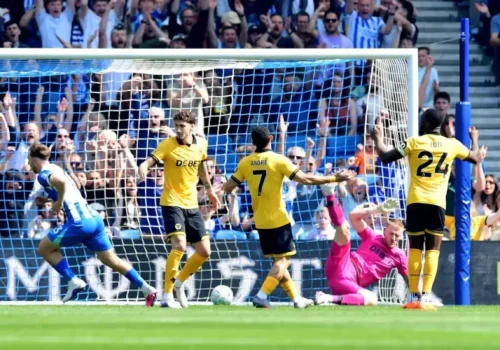
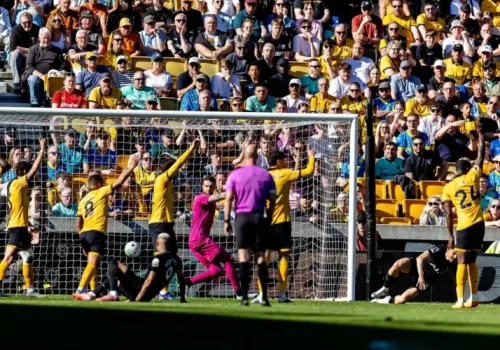
If you’re looking for someone who actually treated this like a Premier League match rather than a casual Sunday kickabout, Hugo Bueno is your man. Constantly involved, getting forward, trying to make things happen, and crucially, delivering the corner for Santiago Bueno’s equaliser. It wasn’t just the assist. It was the intent. The willingness to actually do something.
In a game where urgency was apparently optional for some, Bueno looked like one of the few players who realised Wolves were facing ten men and thought, “Maybe we should, you know, win this?” Radical idea, I know.
Bad: Ten Men, Space to Play… Still Nothing
Bad: Effort Levels Severely Lacking
You know those group projects at school where one person does all the work, a couple chip in occasionally, and the rest just sort of exist? Yeah, this felt like that. There were players trying, Bueno, Armstrong, and a few others here and there, but too many just drifted through the game, showing no urgency, no consistent pressing, and no real desire to impose themselves.
When you’re playing against ten men, that lack of intensity stands out even more. Wolves had pressure, but it often felt slow, predictable, and worst of all, comfortable for Sunderland. Even when chances came, they lacked conviction: headers straight at the keeper and shots that felt more like polite suggestions than genuine attempts to score. You can forgive a lack of quality sometimes, but a lack of effort? That’s where patience really starts to disappear.
In the end, this was one of those results that looks acceptable on paper but feels far worse when you’ve actually watched it unfold. A point against ten men at home isn’t an improvement; it’s the bare minimum dressed up as something slightly more respectable. Wolves had the advantage, the time, and enough of the ball to win this game comfortably, yet still left it feeling like an opportunity wasted.
There are positives, you can always find those if you look hard enough (trust me, I have to look very hard sometimes), but they’re overshadowed by the same recurring issues: a lack of cutting edge, a lack of urgency, and, most frustratingly, a lack of consistent effort across the pitch. Until that changes, these types of performances will keep cropping up, and so will the same conversations afterwards. For now, it goes down as another game where Wolves didn’t lose, but also another where they didn’t really convince anyone they deserved to win either. And that, more than anything, is the problem.